LoadingLoading…
Game Design
Playable ads in 2026: the data, and how we build ours
Playables doubled their share of mobile game ad creatives in a year. Here is what the data supports, what every ad network demands of the file, and how Playable Studio turns a game build into a finished playable — with one you can play in the article.
6 min read
A playable ad is the only format where the product is the pitch. The player taps, the game answers, and a few seconds later they know whether they want it. No promise to break.
That used to be a novelty. In 2025 it stopped being one: playables went from 6.3% to 13.3% of all mobile game ad creatives, according to Sensor Tower. One in eight.
This article covers what the data actually supports, why playables are so fiddly to produce, and how our own tool, Playable Studio, handles the fiddly part. There is a real playable a few lines down. Play that first.
Play it here
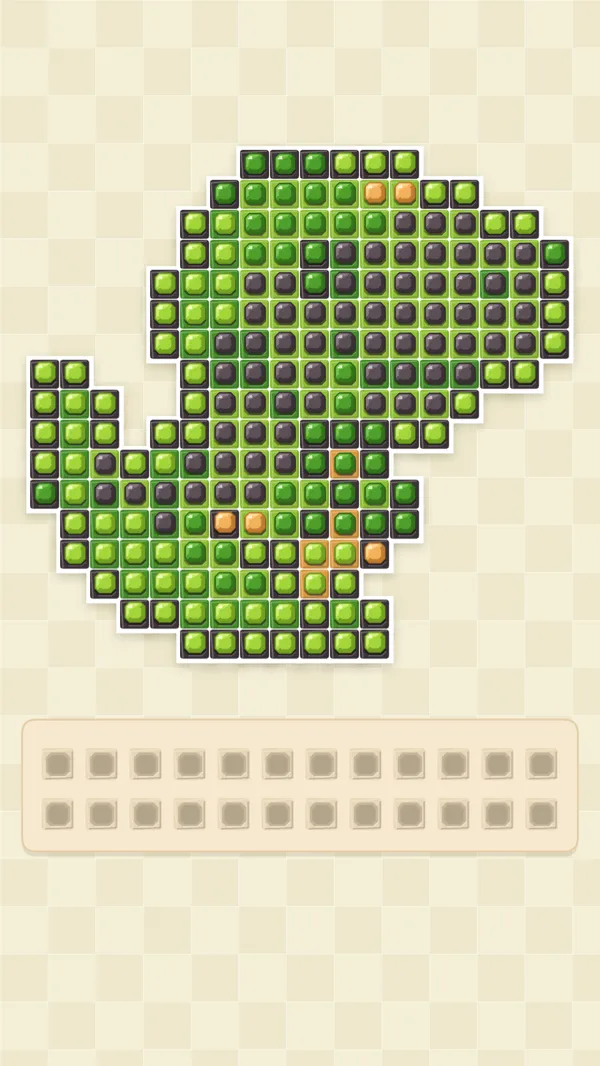
What a playable ad is
A playable ad is a small, self-contained game that runs inside another app. It is a slice of real play: the ad network hands your file to the phone, the player gets a few taps of the game, and an end card offers the install.
- It is one file. Usually a single HTML file with the art, sound and code embedded in it.
- It runs inside the ad SDK. The file talks to the host app through MRAID, a small standard that tells it when it is visible and how to open the store.
- It is short. A few taps, one satisfying moment, then the end card.
The same file works on a web page, which is why the dinosaur above plays on this article exactly as it would inside an ad.
The format had a very good year
Creative Mix
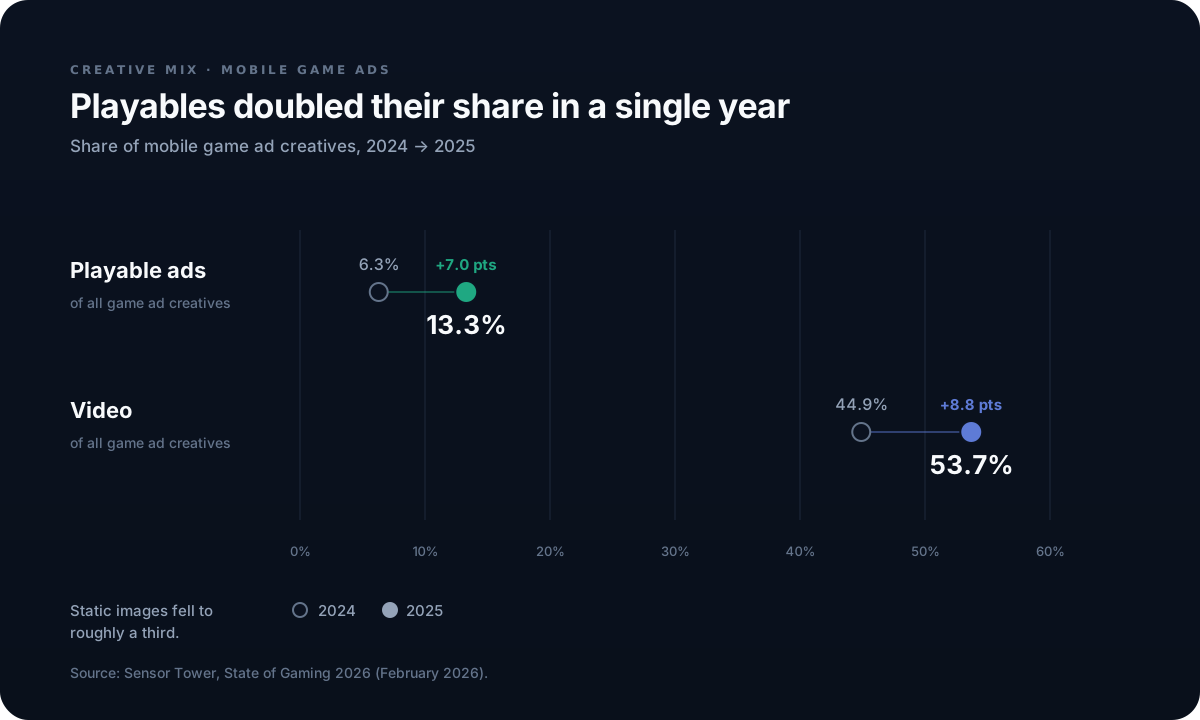
Playables nearly doubled their share of game ad creatives in 2025, while video grew to 53.7% and static images fell to roughly a third. Playables are still the smallest slice, and the fastest growing one.
On conversion, the best-sourced figure comes from Liftoff, which looked at 4.7 trillion impressions between January 2023 and May 2025: playables converted impressions into installs at 8× the rate of non-playable formats for top-spending game advertisers, and 16× for everyone else.
That number deserves its context. Playables only run at volume on a narrow set of networks, so this describes how they perform where they actually serve. It is not a promise that a playable beats a video everywhere.
If a playable statistic sounds too clean, check who published it. The widely quoted "4.8 IPM versus 2.9 for video" and "playables last 15.4 days" figures were traced to a report that does not exist, and were retracted by the site that published them.
The hard part is the packaging, not the game
Here is what surprises people who have never shipped one. The game is the easy half. The networks are the other half, and they disagree with each other.
Network Specs
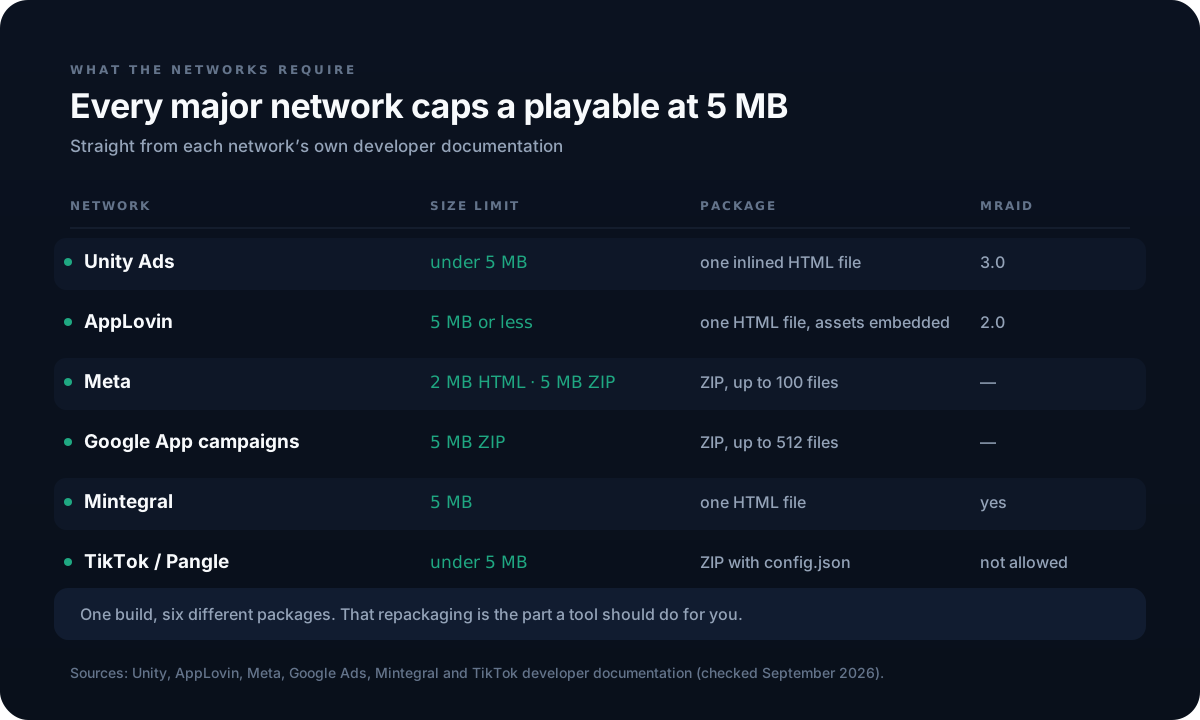
Unity, AppLovin and Mintegral each want one HTML file with everything inlined. Meta, Google and TikTok want a ZIP bundle instead, with their own file counts. Unity expects MRAID 3.0, AppLovin expects 2.0, and TikTok forbids the MRAID script outright. Everyone caps the whole thing at about 5 MB, and Meta wants the HTML itself under 2 MB.
Then come the behaviour rules: no sound before the first tap, no store redirect on the first tap, no external requests, and the timer only starts once the player touches something.
None of this is creative work. All of it will fail your upload.
And you need a great many of them
Creative Volume
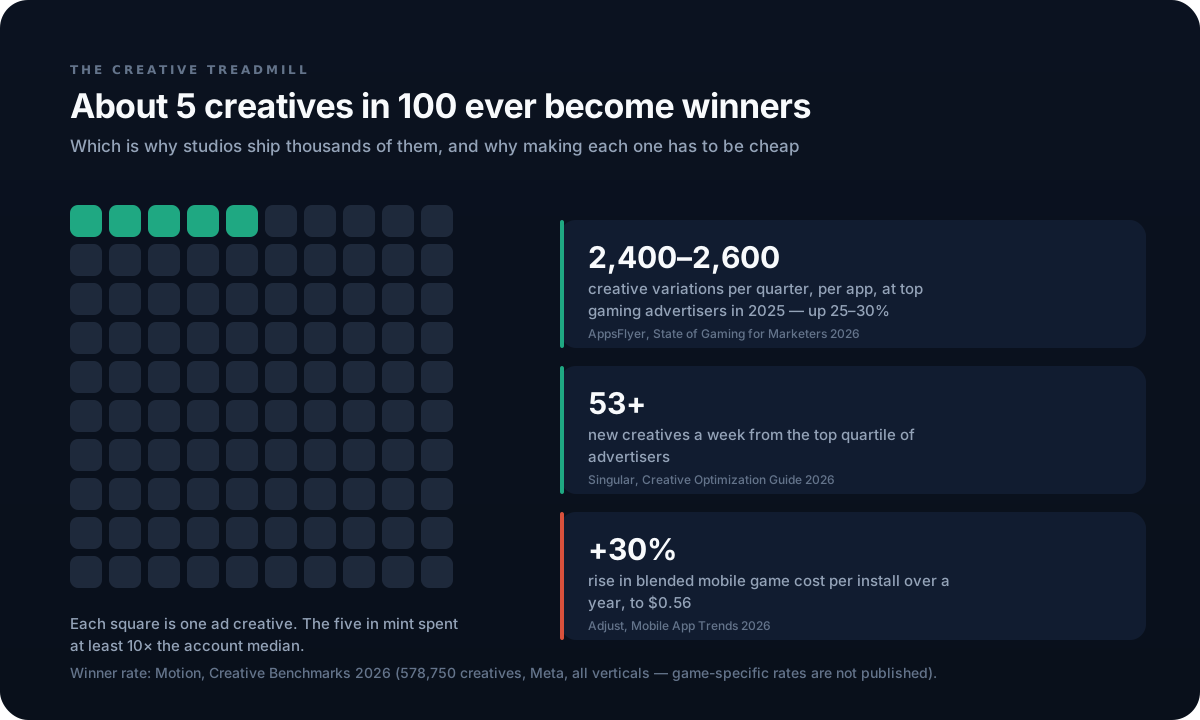
Top gaming advertisers produced 2,400 to 2,600 creative variations per quarter, per app in 2025, up 25–30% on the year before, on AppsFlyer’s numbers. The top quartile of advertisers launches 53 or more new creatives a week.
They do that because most creatives do not work. Across 578,750 creatives, Motion found about 5% became winners, spending at least ten times the account median. That study covers Meta ads across all verticals rather than game playables specifically, but no one publishes a better-documented figure, and nothing suggests games are kinder.
Meanwhile the blended cost per install for mobile games rose 30% in a year, to $0.56. More variants, higher prices, same budget.
Agencies quote roughly $3,000 to $5,000 to build a single playable, with a two to four week turnaround. At that rate, a quarter of variants is not a line in the budget. It is the budget.
Playable Studio
That gap is why we built Playable Studio. It runs in the browser, it takes the web build you already have, and it gives back a finished playable packaged for each network. No install, no SDK, no engineer.
Bring your game
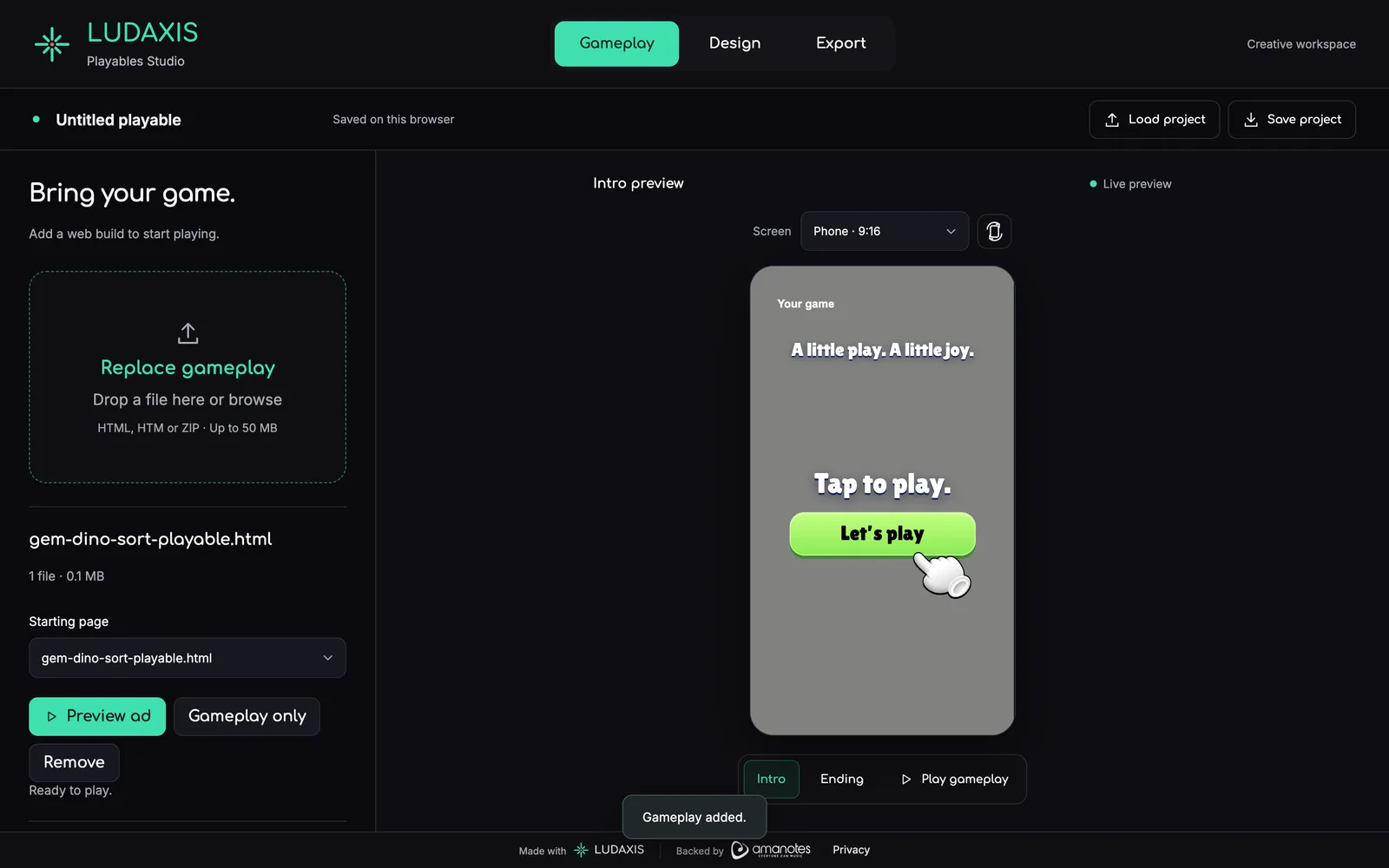
Drop in an HTML file or a ZIP of a web build, up to 50 MB. Unity, Godot, Construct, plain canvas: if it runs in a browser, it runs here. The Studio wraps it in an ad immediately, so you are looking at the real thing within seconds.
Step 1 · Bring your game
Set the ad flow
Choose whether the ad opens on an intro, ends on an end card, or loops until the player leaves. Choose what counts as progress: completed taps and drags, or events your game already fires. This is the pacing dial that decides whether the end card arrives at the right moment or too early.
Step 2 · Set the ad flow
Design the end card
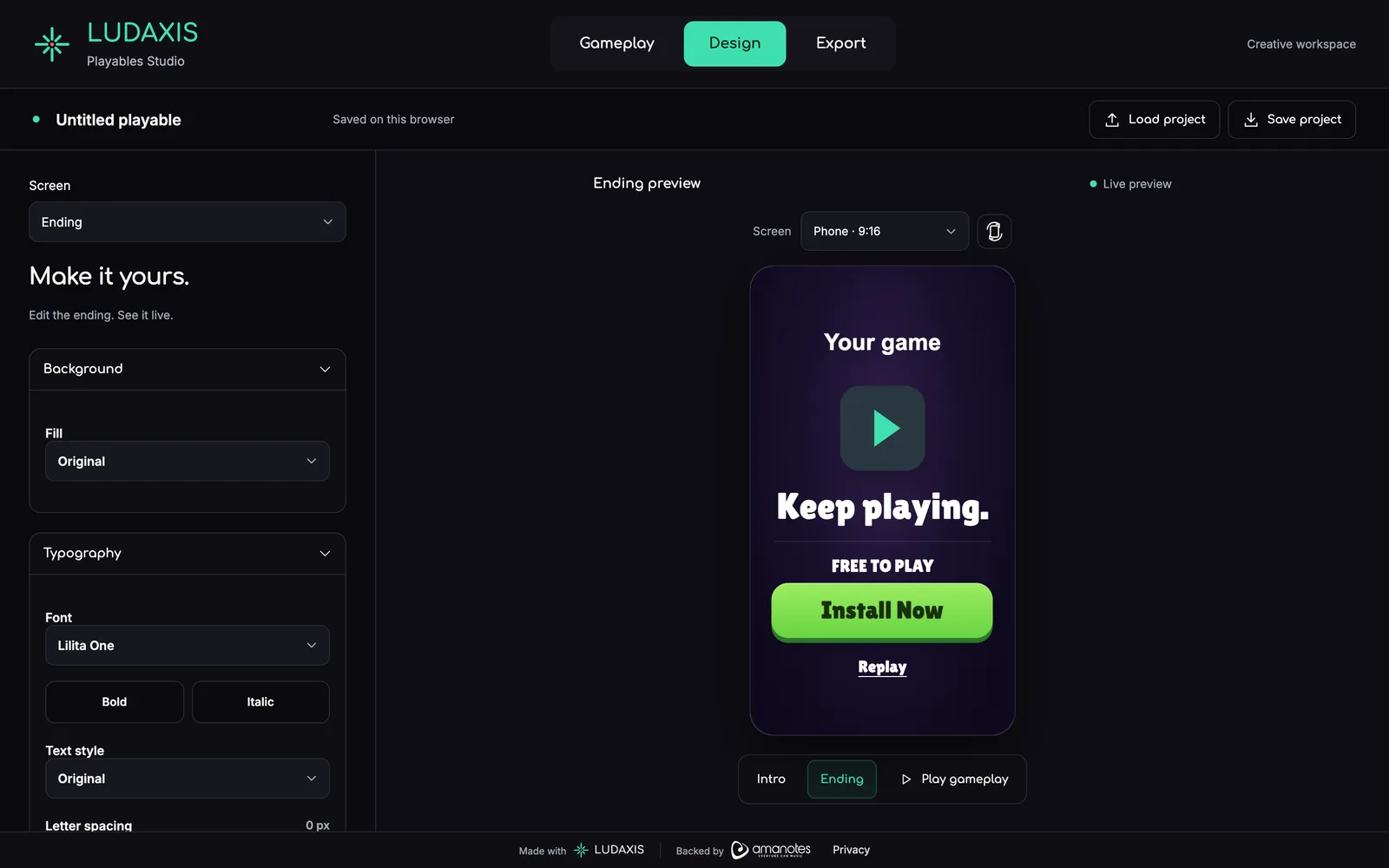
The end card is the part that has to earn the install, and it is usually the part that waits three days for a developer. Here it is a live editor: background, fonts, logo, app icon, the button text, the button colour, whether a replay link shows. You watch it change on a phone frame as you type.
Step 3 · Design the end card
Export for each network
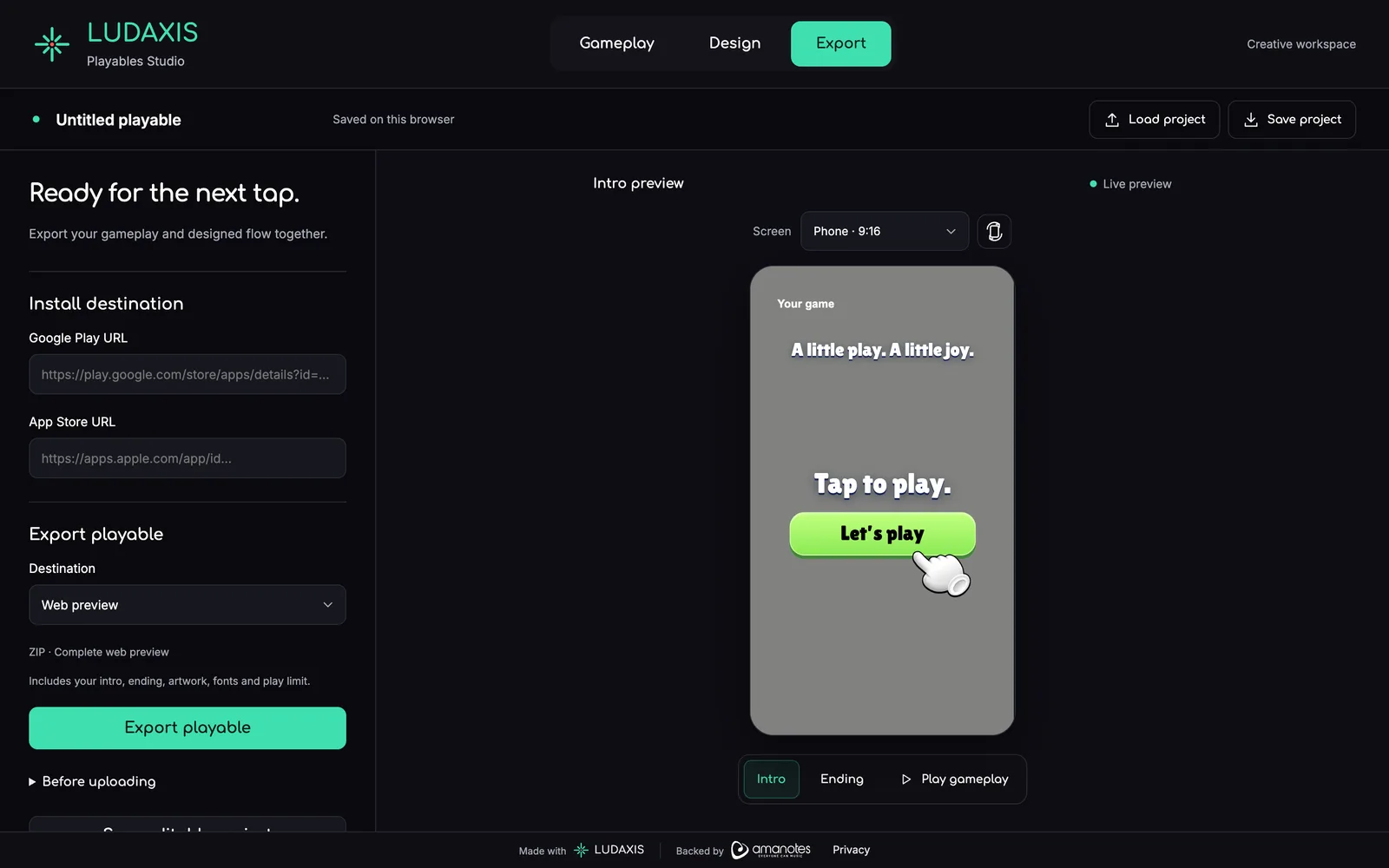
Add your store links, pick a destination, and export. Web preview, Google App campaigns, TikTok/Pangle, Unity Ads, AppLovin or Meta, each packaged the way that network’s documentation requires. The project itself saves as a file you can reopen and change later.
Step 4 · Export
What happened with the dinosaur
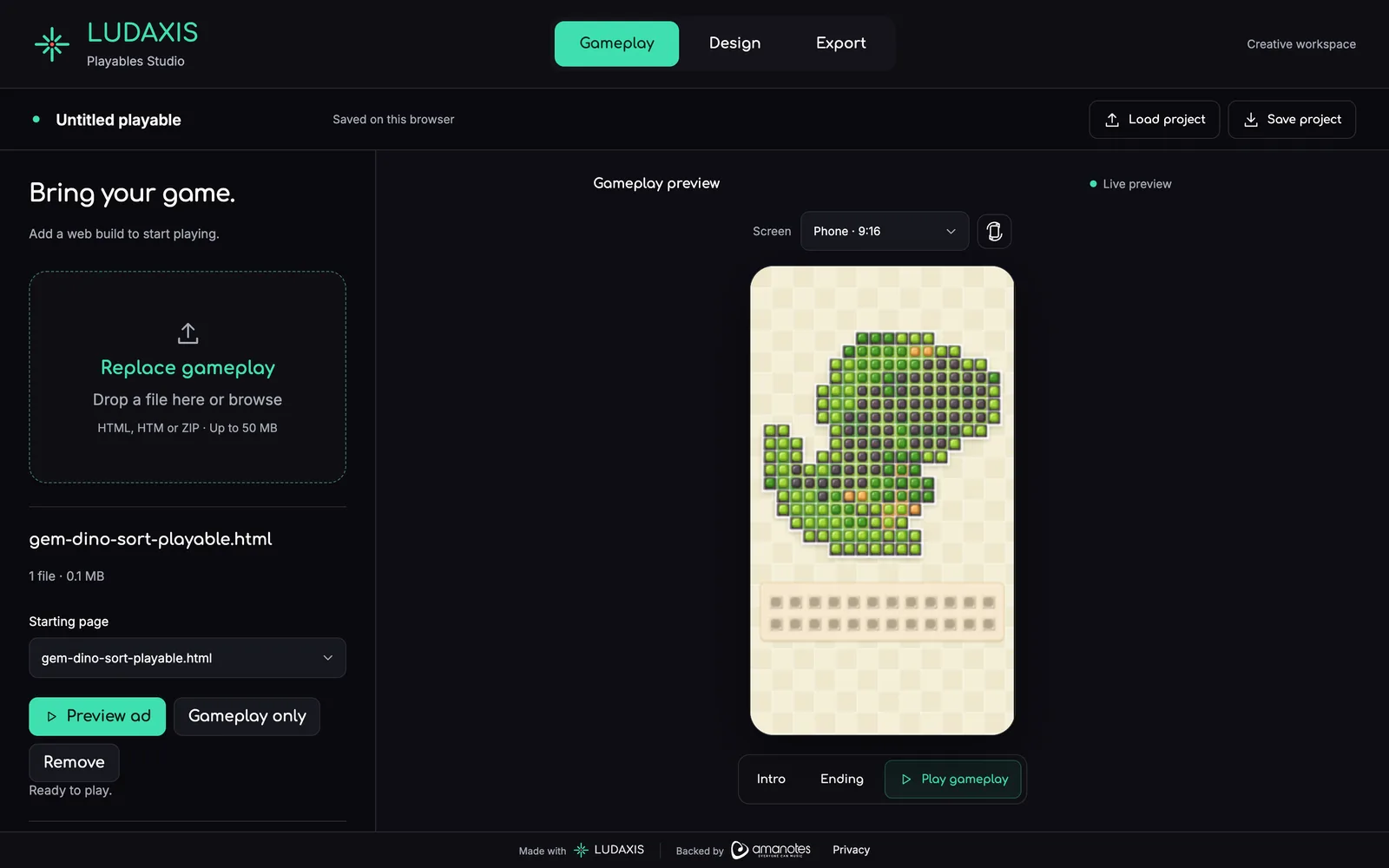
The game at the top of this article is Gem Dino Sort: tap a gem, every gem of that colour lights up, and the ones in the wrong place fly home. It is a single HTML file, 57 KB, with no dependencies.
We dropped that file into Playable Studio for this article. It loaded, generated an intro and an end card around it, and ran in the preview at phone size. The build you are playing here is the same file, embedded in the page.
Two useful facts fell out of that. A playable is a web page, so the work doubles as a demo on your own site. And at 57 KB, it leaves the entire 5 MB network budget to the game.
Why this is worth having
- Minutes instead of weeks. The gap between "try this idea" and "upload this creative" stops being a sprint.
- One build, every network. The packaging differences stay the tool’s problem, not yours.
- Designers can finish the job. End cards, colours and copy do not need an engineer.
- Cheap variants beat clever ones. If roughly five in a hundred creatives win, the winning move is making a hundred of them affordably.
- The same file works on the web. A playable in a store listing, a landing page or an article is the same artefact you shipped to the network.
Try it
Playable Studio is live at playablestudio.ludaxis.io. Bring a web build and see your own game as an ad. We are a small studio in Tallinn, we make music puzzle games, and we built this because we needed it.
Questions we get
What is a playable ad?
A short, self-contained game inside an ad slot. The player gets real gameplay for a few taps, then an end card offering the install. The file is usually a single HTML document that talks to the ad SDK through MRAID.
How big can a playable ad be?
About 5 MB on every major network. Unity Ads asks for under 5 MB as a single inlined HTML file, AppLovin for 5 MB or less, Meta for a 5 MB ZIP whose HTML is under 2 MB, Google App campaigns for a 5 MB ZIP, and TikTok/Pangle for under 5 MB after compression.
Do I need Unity to make one?
No. You need a build that runs in a browser. Unity’s WebGL export works, and so does anything else that produces HTML, JavaScript and assets, including a hand-written canvas game like the dinosaur above.
Which networks can Playable Studio export to?
Google App campaigns, TikTok/Pangle, Unity Ads, AppLovin and Meta, plus a web preview ZIP you can host yourself.
Can I put a playable on my own website?
Yes, and it matters more than it used to: Google Play Instant was discontinued in December 2025, so "try before you install" has moved back to the open web. A playable is already a web page, so the same file works in a landing page or an article.
This article was generated with AI assistance and reviewed for quality and accuracy. All insights reflect the expertise and perspectives of Ludaxis.
Sources & References
- Sensor Tower — State of Gaming 2026 (creative mix)
- Liftoff — 2025 Mobile Ad Creative Index (playable conversion)
- AppsFlyer — State of Gaming for Marketers 2026 (creative volume)
- Motion — Creative Benchmarks 2026 (winner rate)
- Adjust — Mobile App Trends 2026 (cost per install)
- Unity — Playable asset specifications
- AppLovin — Creative specs and guidelines
- Meta — Playable ad specifications
- Google Ads — HTML5 and playable ads for App campaigns
- TikTok — Pangle playable ad requirements
- Google — Play Instant discontinued (December 2025)
- Game Growth Advisor — retraction of widely quoted playable IPM figures